
Choosing between 304, 316 and 316L stainless steel often looks straightforward.
304 is the general-purpose grade.
316 offers greater corrosion resistance.
316L is preferred for welding.
These statements are broadly correct - but they are not enough to make a sound material-selection decision.
In practice, the right grade depends on the operating environment, chloride exposure, fabrication route, machining requirements, surface condition, component geometry and expected service life. Selecting a more highly alloyed grade does not automatically guarantee better performance, just as choosing the lowest-cost grade does not necessarily reduce the total cost of a component.
This guide explains the practical differences between 304, 316 and 316L stainless steel from the perspective of industrial buyers, engineers, machine shops and component manufacturers.
304, 316 and 316L: The Basic Difference
All three grades belong to the austenitic stainless-steel family. They provide useful corrosion resistance, good formability, excellent toughness and reliable performance across a broad range of industrial applications.
Their principal differences are alloy composition and carbon control.
| Grade | Common designation | Defining characteristic |
|---|---|---|
| 304 | UNS S30400 / EN 1.4301 | General-purpose chromium-nickel stainless steel |
| 316 | UNS S31600 / EN 1.4401 | Molybdenum-bearing grade with improved resistance to localized corrosion |
| 316L | UNS S31603 / EN 1.4404 | Low-carbon version of 316, reducing sensitization risk during welding or thermal exposure |
The L in 316L means low carbon. It does not mean low alloy, lower quality or lower corrosion resistance.
Under commonly used specifications, 316L has a maximum carbon content of 0.03%, compared with a maximum of 0.08% for standard 316. The remaining composition is broadly similar, subject to the precise standard and product form being specified.
Corrosion Resistance: Where the Main Difference Appears
Stainless steel resists corrosion because chromium in the alloy forms a thin, self-repairing passive film on the surface.
However, this passive layer is not invulnerable.
Chlorides, stagnant liquids, deposits, surface contamination, crevices and elevated temperatures can damage it and initiate localized corrosion.
304 Stainless Steel
304 performs reliably in many atmospheric, indoor and mildly corrosive environments.
Typical applications include:
1. General engineering components
2. Food-processing equipment
3. Architectural fittings
4. Fasteners
5. Machine parts
6. Tanks and fabricated equipment
7. Commercial kitchen equipment
8. Freshwater systems
However, 304 becomes less reliable when chloride exposure increases. Salt spray, brine, de-icing salts, chlorinated cleaning chemicals and coastal environments can produce pitting, crevice corrosion or surface staining.
For these conditions, 316 or 316L is often considered.
316 Stainless Steel
316 contains molybdenum, which improves resistance to pitting and crevice corrosion compared with 304, particularly in chloride-bearing environments.
This makes 316 suitable for more demanding applications such as:
1. Chemical-processing equipment
2. Coastal installations
3. Marine components
4. Pharmaceutical equipment
5. Pumps and valves
6. Pulp and paper machinery
7. Food-processing systems using aggressive cleaning chemicals
8. Process-industry components
However, 316 should not be described as completely seawater-proof.
Warm seawater, stagnant chloride solutions, tight crevices, deposits and poor surface condition can still attack 316. Severe marine, offshore or chemical service may require duplex, super duplex, 904L, 6% molybdenum stainless steel or another higher-alloyed material.
The operating environment must determine the grade - not the word marine alone.
316L Stainless Steel
316L generally provides corrosion performance similar to 316 in properly processed and solution-annealed material.
Its main advantage is the lower carbon content.
During welding or prolonged exposure to certain elevated-temperature ranges, chromium carbides can form at grain boundaries in higher-carbon austenitic stainless steels. This process, known as sensitization, can reduce resistance to intergranular corrosion in the affected area.
The controlled carbon level of 316L reduces this risk, making it particularly valuable for:
1. Welded fabrications
2. Thick-section components
3. Process vessels
4. Pharmaceutical equipment
5. Chemical installations
6. Hygienic systems
7. Components that cannot be solution annealed after welding
It is important to understand that 316L is not automatically more resistant than 316 to every form of corrosion. Its principal metallurgical advantage concerns sensitization and intergranular corrosion following welding or thermal exposure.
Is 316L Better Than 316?
Not universally.
If a component is supplied as an unwelded, correctly solution-annealed bar and will not experience significant thermal exposure, standard 316 may perform satisfactorily.
If the component will be extensively welded, fabricated in heavy sections or exposed to a relevant thermal cycle, 316L may provide a safer and more practical choice.
The decision should therefore consider the complete manufacturing route - not only the final operating environment.
In many markets, dual-certified 316/316L material is also available. Buyers should still confirm that the actual chemistry, mechanical properties and certification satisfy the governing specification rather than relying on the dual designation alone.
Machining 304, 316 and 316L Stainless Steel
All three grades can be machined successfully, but none should be treated like a free-machining carbon steel.
Austenitic stainless steels combine high ductility with a strong tendency to work-harden. They also retain heat near the cutting zone and frequently produce long, difficult-to-control chips.
Common machining challenges include:
1. Rapid work hardening
2. Built-up edge on cutting tools
3. Stringy chip formation
4. High cutting-zone temperatures
5. Tool wear
6. Poor surface finish
7. Dimensional movement after machining
8. Difficulty maintaining productivity during long production runs
Machining 304
304 is widely machined for general industrial components. It can provide predictable results when the machine, tooling, coolant delivery and cutting parameters are properly controlled.
The cutting tool should continue cutting beneath the previously work-hardened surface. Tool rubbing, light intermittent cuts and unnecessary dwelling can increase work hardening and shorten tool life.
Machining 316 and 316L
316 and 316L may be somewhat more demanding because of their alloy content, toughness and tendency to work-harden.
Machine shops may experience:
1. Greater cutting resistance
2. Increased heat generation
3. More demanding chip control
4. Higher tool wear
5. Difficulty maintaining surface finish
6. Lower machining productivity if the process is not optimized
The difference between 316 and 316L is not normally the dominant machining consideration. Bar straightness, microstructural consistency, surface condition, residual stress, dimensional tolerance and upstream processing can have a greater effect on production performance than the carbon difference alone.
Two bars carrying the same grade designation can behave differently on a CNC machine if their manufacturing routes are not equally controlled.
Bar Quality Matters Beyond Chemical Composition
A material certificate confirms important information, but chemistry alone does not establish how a bar will perform during machining or in a precision application.
Industrial buyers should also consider:
1. Billet or feedstock quality
2. Heat-treatment consistency
3. Inclusion control
4. Grain structure
5. Straightness
6. Out-of-roundness
7. Diameter tolerance
8. Surface integrity
9. Residual stress
10. Ultrasonic or surface inspection requirements
11. Traceability
12. Packing and handling
These factors are especially important for long shafts, pump components, valve parts, fasteners, precision-machined components and high-volume CNC production.
A technically correct grade can still create substantial downstream cost if the bar bends after machining, produces inconsistent chips, damages tools or fails dimensional inspection.
Cost: Why 316 and 316L Are More Expensive
316 and 316L generally cost more than 304 because they contain molybdenum and usually have higher nickel requirements.
The actual price difference changes with:
1. Nickel and molybdenum prices
2. Alloy surcharges
3. Product form
4. Diameter and section size
5. Order quantity
6. Surface finish
7. Dimensional tolerance
8. Testing requirements
9. Certification
10. Processing condition
11. Delivery location
316L is not always substantially more expensive than 316. Availability and regional stocking practices can be more influential than the carbon difference.
The better purchasing question is not simply:
Which grade has the lowest price per kilogram?
It is:
Which grade provides the lowest total cost while meeting the required service life, manufacturing route and failure risk?
Using 316L in a mild indoor application may add cost without creating meaningful value. Using 304 in an aggressive chloride environment can create far greater costs through corrosion, replacement, downtime and warranty exposure.
Application-Based Selection Guide
| Application or requirement | Typical starting point |
|---|---|
| General indoor engineering components | 304 |
| Mild atmospheric exposure | 304 |
| Food-processing equipment in moderate conditions | 304 or 316L |
| Components requiring extensive welding | 304L or 316L, depending on corrosion exposure |
| Coastal or chloride-bearing atmosphere | 316 or 316L |
| Chemical-processing equipment | 316L or a more highly alloyed grade, depending on the chemical environment |
| Pharmaceutical and hygienic systems | Frequently 316L |
| Marine components above the waterline | Often 316 or 316L, subject to design and exposure |
| Continuous seawater or severe chloride service | Engineering review required; 316L may be insufficient |
| Precision-machined parts in a mild environment | 304 may be adequate |
| Pump and valve components | 316 or 316L where the medium requires stronger corrosion resistance |
| Welded process equipment | Commonly 316L where chloride or chemical exposure exists |
This table is an initial screening guide, not a substitute for application engineering.
Temperature, chloride concentration, pH, oxygen level, fluid velocity, cleaning chemicals, crevices, surface finish and maintenance conditions can all influence performance.
Can a Magnet Identify 304, 316 or 316L?
No.
304, 316 and 316L are generally described as non-magnetic in the solution-annealed condition. However, cold drawing, machining, forming and other deformation processes can introduce some magnetic response.
A magnet test cannot reliably distinguish:
1. 304 from 316
2. 316 from 316L
3. A conforming grade from a non-conforming grade
4. Corrosion-resistant material from unsuitable material
Where grade verification matters, buyers should rely on material certification, heat traceability and, where required, positive material identification.
What Buyers Should Specify on an Enquiry
A complete stainless-steel bar enquiry should include more than the grade.
Where applicable, specify:
1. Grade and UNS or EN designation
2. Governing material standard
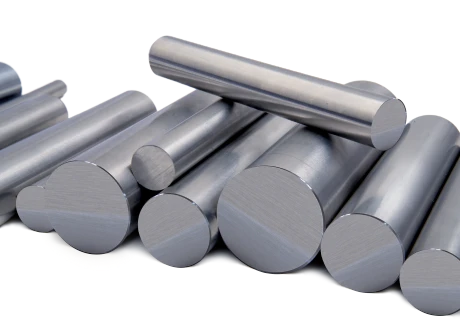
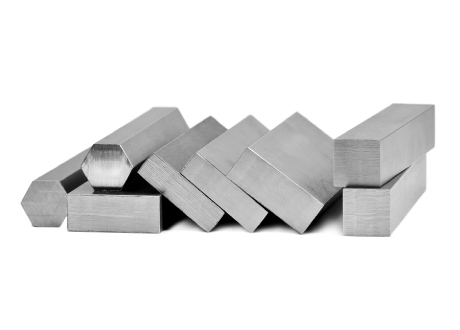
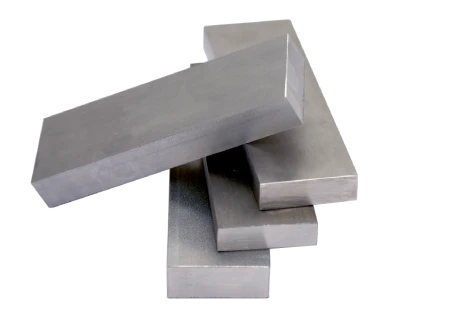
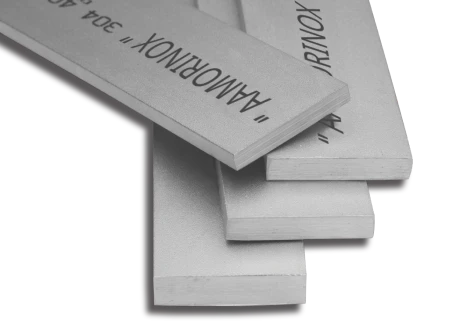
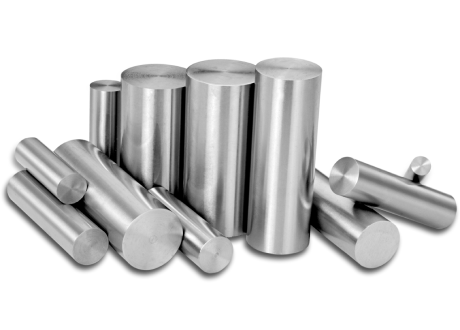
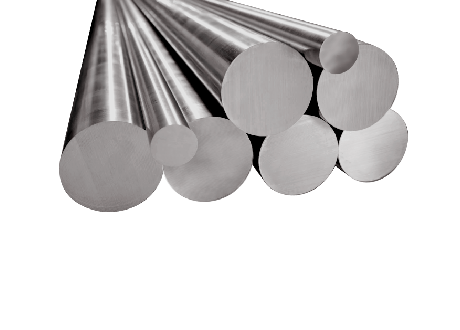
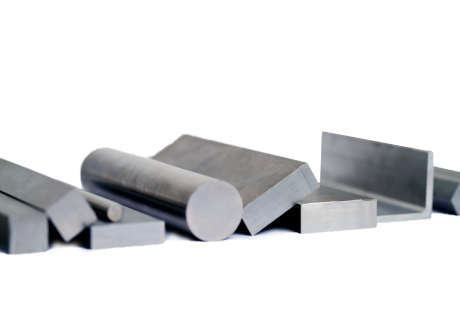
3. Product form: round, hexagon, square or flat
4. Diameter or section size
5. Length and length tolerance
6. Delivery condition
7. Dimensional tolerance
8. Straightness requirement
9. Surface finish or roughness
10. Heat-treatment condition
11. Mechanical-property requirements
12. Material certificate requirement
13. PMI, ultrasonic, eddy-current or other inspection requirements
14. End application and operating environment
15. Whether the component will be welded, machined, ground or polished
Providing this information helps the producer assess whether 304, 316 or 316L is genuinely appropriate and whether additional processing or inspection is necessary.
Final Decision: 304, 316 or 316L?
Choose 304 when the environment is relatively mild and the additional chloride resistance of a molybdenum-bearing grade is not required.
Choose 316 when improved resistance to pitting and crevice corrosion is needed and the fabrication route does not create a significant sensitization concern.
Choose 316L when the corrosion performance of 316 is required together with better protection against sensitization during welding or relevant thermal exposure.
But grade selection is only part of the decision.
For stainless-steel bars used in precision machining, shafts, pumps, valves and engineered components, performance also depends on dimensional control, straightness, surface integrity, heat treatment, residual stress, inspection and traceability.
The best material is not necessarily the most highly alloyed grade.
It is the grade - and the bar manufacturing route - that matches the real operating environment, production process and commercial risk.
Surface Integrity in 420 Stainless Steel Flat Bars: EN 1.4021 - 1.4034 for Precision Medical Tools
ASTM A276 vs ASTM A479 vs ASME SA-479: Which Stainless Steel Bar Standard Should Buyers Specify?
Rolled Flat Bar or Slit Flat Bar? The Manufacturing Differences Buyers Should Understand

A-30, Site 4, UPSIDC Industrial Area, Sahibabad, Ghaziabad 201010, Uttar Pradesh, India
Plot #10, Site 2, Industrial Area, Loni Road Mohan Nagar, Ghaziabad 201007, Uttar Pradesh, India
Let’s Start Your Project