
The Machining Conversation Usually Starts With Tool Life. It Should Start With the Application.
When engineers discuss free-machining stainless steels, the conversation often becomes overly simplified.
One grade is labelled as more machinable.
The other is considered more corrosion resistant.
Material selection then becomes a straightforward comparison of machinability percentages and corrosion performance charts.
In practice, the decision is rarely that simple.
Many machining challenges attributed to tooling, machine setup, or cutting parameters can often be traced back to selecting a stainless steel grade that was never fully aligned with the application’s operating environment.
430F and 416 stainless steel are both widely used free-machining stainless steels. Both are designed to improve productivity in high-volume machining operations. Yet their metallurgical structures, corrosion behavior, magnetic properties, heat treatment response, and end-use suitability differ significantly.
Understanding these differences is critical for machine shops, OEMs, procurement teams, and design engineers seeking long-term manufacturing reliability rather than simply shorter cycle times.
Why This Comparison Matters
In many industries, machining cost represents a substantial portion of the finished component cost.
A grade that machines faster can reduce:
• Cycle times
• Tool consumption
• Machine downtime
• Secondary finishing operations
However, machining efficiency alone does not determine total component cost.
Environmental exposure, dimensional stability, wear resistance, strength requirements, and service life must also be considered.
Selecting the wrong grade can create hidden costs long after the machining operation is complete.
This is where the distinction between 430F and 416 becomes important.
Understanding the Metallurgical Difference
What Is 430F Stainless Steel?
430F is a free-machining ferritic stainless steel.
It is essentially a machinability-enhanced version of 430 stainless steel, with sulfur intentionally added to improve chip formation and reduce tool wear.
Ferritic stainless steels contain little or no nickel and derive their corrosion resistance primarily from chromium.
The ferritic microstructure provides:
• Good machinability
• Magnetic properties
• Good resistance to atmospheric corrosion
• Lower thermal expansion than austenitic grades
• Good dimensional stability
Because nickel is generally absent, ferritic grades often provide a cost advantage when nickel markets become volatile.
What Is 416 Stainless Steel?
416 is a free-machining martensitic stainless steel.
Like 430F stainless steel, sulfur is intentionally added to improve machinability.
However, the martensitic structure introduces an important capability:
It can be heat treated to significantly higher strength and hardness levels.
This makes 416 particularly attractive for components requiring:
• Wear resistance
• Mechanical strength
• Machined precision features
• Shaft applications
• Moving mechanical assemblies
The ability to heat treat is often the deciding factor when selecting 416.
430F vs 416: Key Property Comparison
| Property | 430F | 416 |
|---|---|---|
| Stainless Family | Ferritic | Martensitic |
| Magnetic | Yes | Yes |
| Heat Treatable | No | Yes |
| Strength Potential | Moderate | High |
| Hardness Potential | Moderate | High |
| Machinability | Excellent | Excellent |
| Wear Resistance | Moderate | Higher |
| Atmospheric Corrosion Resistance | Better | Moderate |
| Cost Stability | Less affected by nickel pricing | Less affected by nickel pricing |
| Dimensional Stability During Heat Treatment | Excellent | Requires heat treatment control |
Which Grade Machines Better?
The Short Answer: Both Machine Extremely Well
Both grades were developed specifically for machining-intensive applications.
Compared with conventional stainless steels such as 304L or 316L, both offer significantly improved chip control and reduced cutting forces.
Machine shops often choose these grades because they allow:
• Higher cutting speeds
• Longer tool life
• Improved chip breakage
• Better process stability
• Reduced machine downtime
However, their machining behavior is not identical.
Why 416 Is Often Considered the Benchmark for Machinability
Among stainless steels, 416 is frequently regarded as one of the easiest grades to machine.
Its sulfur-enhanced chemistry and martensitic structure typically produce:
• Consistent chip formation
• Lower cutting resistance
• Reduced built-up edge formation
• Excellent thread generation
• Reliable drilling performance
For complex turned components, deep-hole drilling, threading, and high-volume CNC production, 416 is often the preferred choice.
This explains its widespread use in:
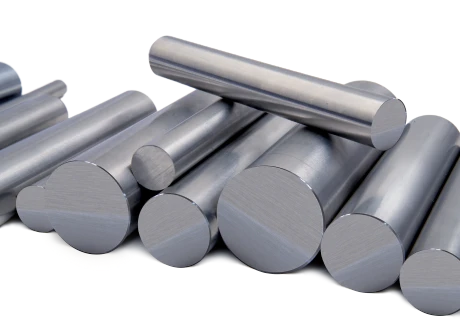
• Precision shafts
• Valve components
• Instrument parts
• Fasteners
• Pump components
Where 430F Performs Exceptionally Well
430F offers excellent machining performance while delivering better atmospheric corrosion resistance than many martensitic grades.
Its ferritic structure provides:
• Stable machining behavior
• Good chip control
• Consistent dimensional response
• Lower distortion risk
This makes 430F attractive for:
• Appliance components
• Solenoid components
• Electrical equipment
• Decorative mechanical parts
• Automotive hardware
In applications where extreme strength is unnecessary, 430F often provides an effective balance between machinability and corrosion resistance.
The Hidden Cost of Focusing Only on Machinability
Machining Productivity Is Only One Part of the Equation
A common industry mistake is selecting material solely based on machine shop performance.
A component that machines beautifully but fails prematurely in service can become far more expensive than one requiring slightly longer machining cycles.
When evaluating 430F versus 416, engineers should consider:
• Operating environment
• Moisture exposure
• Strength requirements
• Wear conditions
• Fatigue loading
• Post-machining heat treatment requirements
The best machining grade is not always the best application grade.
Corrosion Resistance: An Often Overlooked Difference
Why Ferritic 430F Often Has an Advantage
In mildly corrosive environments, 430F generally demonstrates better atmospheric corrosion resistance than 416.
The reason lies in its ferritic chromium-rich structure and absence of martensitic heat treatment requirements.
For indoor equipment, appliance hardware, and lightly corrosive environments, this can be advantageous.
Where 416 May Require Greater Caution
416’s sulfur additions significantly improve machinability.
However, sulfur-containing inclusions can also become initiation points for localized corrosion.
When components are exposed to:
• Coastal environments
• Chlorides
• Aggressive industrial atmospheres
• Continuous moisture
Engineers often evaluate alternative grades if corrosion resistance becomes critical.
This is particularly important when long-term appearance or surface integrity matters.
Heat Treatment: The Major Differentiator
Why 416 Offers More Mechanical Capability
The biggest advantage of 416 is its ability to be heat treated.
Proper heat treatment allows significant improvements in:
• Hardness
• Tensile strength
• Wear resistance
• Mechanical durability
This capability expands its suitability into applications involving:
• Rotating shafts
• Gears
• Valve stems
• Mechanical couplings
• Motion control systems
430F cannot achieve comparable mechanical properties through heat treatment.
Industry Reality: Heat Treatment Discipline Matters
The benefits of 416 only materialize when heat treatment is properly controlled.
Inconsistent heat treatment can introduce:
• Hardness variation
• Distortion
• Dimensional instability
• Machining inconsistencies
For precision components, heat treatment discipline is often as important as grade selection itself.
Application-Based Selection Guide
Choose 430F When:
• Corrosion resistance is more important than strength
• Components operate in mild environments
• Magnetic properties are required
• Heat treatment is unnecessary
• Dimensional stability is prioritized
Typical applications include:
• Solenoid parts
• Appliance hardware
• Electrical components
• Decorative mechanical assemblies
• Automotive trim hardware
Choose 416 When:
• Maximum machinability is required
• Higher strength is necessary
• Heat treatment capability is important
• Wear resistance matters
• Precision moving parts are involved
Typical applications include:
• Pump shafts
• Valve stems
• Fasteners
• Precision machined components
• Instrumentation hardware
• Mechanical drive systems
Industry Reality: Material Consistency Matters More Than Grade Selection Alone
Many machine shops spend significant time debating whether 430F or 416 offers superior machinability.
In practice, a consistently produced bar often outperforms a theoretically superior grade manufactured with inconsistent process control.
Factors that frequently influence machining performance more than grade selection include:
• Inclusion control
• Billet quality
• Straightness consistency
• Heat treatment discipline
• Surface integrity
• Residual stress management
• Dimensional consistency
The difference between predictable production and recurring shop-floor problems often lies in process consistency rather than the grade designation itself.
Comparison Summary
| Consideration | Better Choice |
|---|---|
| Maximum Machinability | 416 |
| Heat Treatability | 416 |
| Higher Strength | 416 |
| Wear Resistance | 416 |
| Atmospheric Corrosion Resistance | 430F |
| Dimensional Stability | 430F |
| Appliance Components | 430F |
| Precision Mechanical Components | 416 |
| Pump Shafts | 416 |
| Solenoid Components | 430F |
Conclusion
The comparison between 430F and 416 is not simply a question of which grade machines better.
Both grades were developed to improve machining productivity and both continue to serve important roles across precision manufacturing industries.
The real distinction lies in what happens after the machining operation.
If the application requires higher strength, wear resistance, and heat treatment capability, 416 often becomes the logical choice.
If corrosion performance, dimensional stability, and moderate service conditions are the primary considerations, 430F may offer a more balanced solution.
Ultimately, successful material selection depends less on published machinability rankings and more on understanding the complete manufacturing and service environment in which the component will operate.
Learn More
At Aamor Inox, we work closely with OEMs, machine shops, distributors, and engineering teams across global industries where consistency, precision, and process reliability matter.
From stainless steel bright bars and PSQ grades to precision-engineered specialty long products, our focus goes beyond simply supplying material - it is about delivering repeatable performance across demanding manufacturing environments.
To discuss your application requirements or sourcing challenges, connect with our team. Explore more insights on stainless steel manufacturing, machining performance, quality systems, and process reliability at Aamor Inox.
Surface Integrity in 420 Stainless Steel Flat Bars: EN 1.4021 - 1.4034 for Precision Medical Tools
ASTM A276 vs ASTM A479 vs ASME SA-479: Which Stainless Steel Bar Standard Should Buyers Specify?
304 vs 316 vs 316L Stainless Steel: Differences in Corrosion, Machining, Cost and Applications
Rolled Flat Bar or Slit Flat Bar? The Manufacturing Differences Buyers Should Understand

A-30, Site 4, UPSIDC Industrial Area, Sahibabad, Ghaziabad 201010, Uttar Pradesh, India
Plot #10, Site 2, Industrial Area, Loni Road Mohan Nagar, Ghaziabad 201007, Uttar Pradesh, India
Let’s Start Your Project