
A stainless-steel bar can meet the purchase specification, pass dimensional inspection and arrive with complete material certification yet still create a compliance problem for the European importer.
The issue is no longer confined to chemistry, mechanical properties or country of origin. From 1 January 2026, the definitive phase of the European Union’s Carbon Border Adjustment Mechanism introduced reporting and financial obligations for covered imports. For stainless-steel bars, the critical questions now include the customs classification, producing installation, production route, embedded emissions methodology and verification status.
This changes what complete supplier documentation means. A mill test certificate remains essential, but it does not contain the information required for CBAM compliance.
Regulatory position reviewed against European Commission guidance available on 14 August 2026. Importers should confirm their position with their customs and CBAM advisers for the applicable CN code and transaction structure.
Are Stainless-Steel Bars Covered by EU CBAM?
CBAM scope is determined by the product’s Combined Nomenclature or CN code, not simply by descriptions such as “stainless steel, bright bar or precision bar.
Chapter 72 iron and steel products are broadly included in Annex I of the CBAM Regulation, subject to specified exclusions. Stainless-steel bars and rods commonly classified under CN heading 7222 therefore fall within the covered product family. However, the correct eight-digit CN code must be established for the actual product, considering its form and method of manufacture.
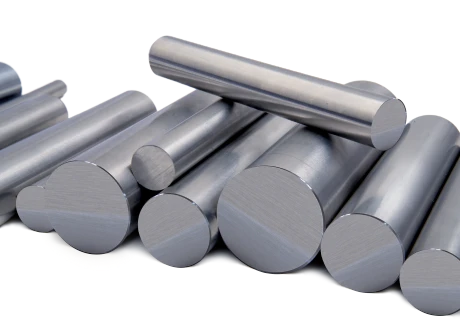
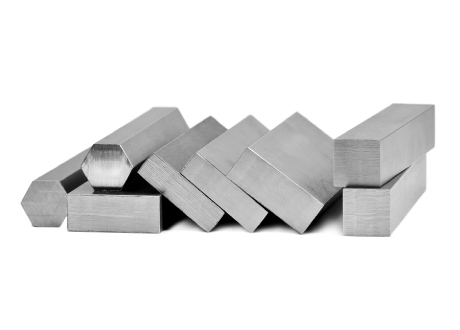
This distinction matters for hot-rolled bars, cold-finished bright bars, smooth-turned rounds, ground bars, hexagons and other long products. Commercial terminology alone is not sufficient for customs classification.
The European Commission’s current guidance advises non-EU operators to compare their product CN codes directly with Annex I. Where Annex I uses fewer than eight digits, all CN codes beginning with those digits are included unless specifically excluded.
CBAM Applies to the Import, Not Merely the Purchase Order
CBAM applies when covered goods are imported into the customs territory of the EU. The party legally responsible is normally the authorised CBAM declarant either the EU importer or, in relevant circumstances, an indirect customs representative.
The non-EU manufacturer does not surrender CBAM certificates. Its responsibility is operational rather than statutory: it must be able to provide sufficiently reliable emissions information if the importer intends to use actual values.
That difference should be understood clearly. The importer carries the declaration risk, but the quality of the declaration may depend heavily on the supplier’s monitoring, traceability and verification system.
The 50-Tonne Threshold Is Not a Shipment Exemption
For covered goods other than hydrogen and electricity, an annual single mass-based threshold of 50 tonnes applies. Importers below the threshold are generally exempt from the authorisation and associated CBAM obligations.
The threshold should not be treated as 50 tonnes per shipment, grade, supplier or individual CN code. Importers need visibility over their cumulative annual imports across the relevant mass-based CBAM sectors. A buyer whose stainless-steel orders appear small individually can cross the threshold when total covered imports are consolidated.
Once the threshold is exceeded, the compliance obligation applies to the relevant imports for the calendar year. The Commission confirms that importers above the threshold must operate through the authorised CBAM declarant framework.
What Changes Financially in 2026?
The definitive period began on 1 January 2026, but certificates for 2026 imports are not purchased during 2026.
Sales of CBAM certificates are scheduled to begin on 1 February 2027. By 30 September 2027, authorised declarants must submit their first annual CBAM declaration, covering 2026 imports, and surrender the corresponding certificates.
For 2026 emissions, certificate prices are calculated using quarterly averages of EU Emissions Trading System auction prices. From 2027, certificate prices are calculated weekly. The number ultimately surrendered is affected by embedded emissions, the applicable adjustment reflecting EU ETS free allocation and, where permitted, a carbon price effectively paid in the country of origin.
The commercial exposure therefore begins before the payment date. Importers buying in 2026 are already accumulating the emissions liability that must be declared and settled in 2027.
Actual Emissions or Default Values?
Importers can declare embedded emissions using verified actual values or applicable European Commission default values.
| Reporting route | What it requires | Commercial implication |
|---|---|---|
| Verified actual values | CBAM-compliant installation monitoring, product-level calculation and verification by an accredited CBAM verifier | Can reflect the supplier’s real production route and emissions performance |
| Commission default values | Applicable country-, year-, product- and route-specific default | Easier administratively, but may not represent the producer’s actual performance |
| Unsupported supplier estimate | Internal calculation without CBAM-compliant verification | Cannot be treated as verified actual emissions |
For most CBAM goods, 2026 default values include a 10% mark-up. The mark-up rises to 20% in 2027 and 30% from 2028, subject to the applicable legislation. This is intended to reduce the risk of emissions being understated through default reporting.
A supplier’s product carbon footprint, environmental declaration or corporate sustainability report may be useful for broader environmental assessment, but it is not automatically interchangeable with CBAM data. CBAM has its own system boundaries, attribution rules, precursor treatment and verification requirements.
What Importers Should Request from Stainless-Steel Bar Suppliers
A credible data package should allow the importer to connect the goods on the customs declaration with the installation and production route used to calculate their embedded emissions.
1. Product and Customs Identification
The supplier should provide:
1. Product description and form;
2. Proposed eight-digit CN code for customer review;
3. Net mass;
4. Country of origin;
5. Country of production, if different;
6. Grade and delivery condition;
7. Invoice, shipment and production references.
The importer remains responsible for the customs declaration. Supplier classification should therefore be treated as documented input, not an automatic substitute for the importer’s own classification review.
2. Producing Installation Details
The data should identify the actual installation at which the relevant CBAM goods were produced. Useful information includes:
1. Operator and installation name;
2. Physical location;
3. Relevant production processes;
4. Production route;
5. Reporting period;
6. CBAM Registry installation identifier, where available.
This becomes particularly important where material is rolled at one location, heat treated elsewhere and finished at a third site.
3. Production Route and Precursor Information
For stainless-steel long products, the finished bar cannot be considered in isolation from its metallic precursor.
The calculation may need to account for the embedded emissions of purchased billet, bloom, ingot or other covered precursor. If actual precursor data is used, the chain must remain traceable to the precursor-producing installation and its verification report. Where actual precursor data is unavailable, the methodology permits relevant defaults to be combined with actual emissions from the downstream production process.
The European Commission’s definitive-period methodology requires system boundaries to include relevant direct emissions and embedded emissions from covered precursors.
4. Monitoring and Allocation Methodology
The supplier should be able to explain how emissions are measured and allocated, including:
1. Fuels and carbon-bearing materials within the boundary;
2. Measurable heat received, generated or exported;
3. Material quantities and activity levels;
4. Treatment of process losses, scrap and saleable off-specification output;
5. Allocation of shared furnaces, utilities and emission sources;
6. Data controls, meter records and calculation factors;
7. Version control and correction procedures.
An emissions number without its methodology is difficult to evaluate and difficult to verify.
5. Verification Status
If actual values are to be declared, the calculation must be verified by an independent verifier accredited through an EU national accreditation body.
Verification takes place at installation level. The operator monitors and calculates the embedded emissions, the accredited verifier reviews the monitoring approach and evidence, and the resulting verified information is supplied through the CBAM Registry or an accepted private channel.
Industry Reality: Bright-Bar Processing Does Not Erase Upstream Emissions
A common misconception is that a cold-finished or ground stainless-steel bar should carry only the emissions from its final processing operation.
That is not how CBAM attribution works.
The metallic precursor remains central. A processor purchasing stainless billet or hot-rolled bar must preserve the link between precursor quantity, source installation, production route and embedded emissions. The downstream installation then adds emissions from transformation processes that fall within the applicable system boundary.
The Commission identifies processes including reheating, remelting, casting, hot rolling, cold rolling, forging, pickling, annealing, coating and wire drawing within the iron and steel boundary. It excludes plating, cutting, welding and finishing. The exact treatment still needs to be assessed against the actual production route and governing methodology.
Consequently, a standard corporate carbon figure divided by total company tonnage is unlikely to provide a defensible product value.
The Hidden Cost of Weak Supplier Data
The obvious CBAM cost is the certificate obligation. The less visible cost is administrative uncertainty.
Weak data can lead to:
1. Reliance on marked-up defaults;
2. Repeated clarification between importer, supplier and verifier;
3. Inconsistent values for the same installation;
4. Difficulty linking shipments to the correct reporting period;
5. Customs delays where authorisation information is incomplete;
6. Disputes over contractual responsibility;
7. Inaccurate purchasing accruals;
8. Reduced ability to compare suppliers on a consistent basis.
For machine shops and distributors, this burden can be disproportionate to the apparent simplicity of the product. One tonne of precision ground bar may be commercially more valuable than one tonne of commodity steel, but the CBAM calculation remains mass- and emissions-based.
A Practical Importer Checklist
Before confirming a 2026 stainless-steel bar programme, European buyers should establish:
1. The confirmed CN code and whether the product is within CBAM scope.
2. The identity of the authorised CBAM declarant.
3. Whether the annual 50-tonne threshold is likely to be crossed.
4. Whether the supplier will provide verified actual values or whether defaults will be used.
5. The installation and production route covered by the emissions value.
6. How billet, bloom, ingot or other precursor emissions are incorporated.
7. Whether production and shipment records can be linked without ambiguity.
8. The expected timing of the verified emissions report.
9. Who must correct data if quantities, classifications or installation information change.
10. How CBAM-related data obligations are reflected in the purchase contract.
CBAM Readiness Is a Process-Control Question
For stainless-steel bar suppliers, CBAM readiness is not achieved by adding a carbon figure to a commercial invoice.
It requires controlled boundaries, stable measurement systems, material-flow reconciliation, documented allocation rules, precursor traceability and records capable of independent verification. These disciplines resemble mature manufacturing quality systems: the reported result must be repeatable, reviewable and connected to the product supplied.
European importers should therefore assess a supplier’s ability to support CBAM with the same seriousness applied to heat traceability, mechanical testing, dimensional inspection and certification control.
Learn More
At Aamor Inox, we work closely with OEMs, machine shops, distributors, and engineering teams across global industries where consistency, precision, and process reliability matter.
From stainless steel bright bars and PSQ grades to precision-engineered specialty long products, our focus goes beyond simply supplying material - it is about delivering repeatable performance across demanding manufacturing environments.
Our Nadcap-accredited heat-treatment and non-destructive testing capabilities strengthen process control, inspection reliability and material traceability for aerospace and other quality-critical applications.
Our NDT infrastructure includes emulsion-coupled ultrasonic testing and FOERSTER eddy-current testing systems. Depending on the product geometry and agreed inspection plan, these systems support examination for internal discontinuities and surface or near-surface imperfections. The applicable method, reference standard, coverage, sensitivity and acceptance criteria are agreed at the enquiry stage.
Where required, supply can also be aligned with customer-specific mechanical testing, dimensional inspection, marking, traceability and certification requirements.
To discuss your application or sourcing requirements, share the applicable specification, dimensions, delivery condition, surface finish, testing and certification requirements with our team.
Explore more insights on stainless steel manufacturing, machining performance, quality systems and process reliability at Aamor Inox.
From Bar to Precision Component: The Engineering Value of Stainless Steel Hexagon Bars
Steam Turbine Blade Materials: Aamor Inox Introduces Specialty Flat Bars in Grades 420 (X20Cr13) and 1.4923 (X22CrMoV12-1)
Surface Integrity in 420 Stainless Steel Flat Bars: EN 1.4021 - 1.4034 for Precision Medical Tools
ASTM A276 vs ASTM A479 vs ASME SA-479: Which Stainless Steel Bar Standard Should Buyers Specify?
304 vs 316 vs 316L Stainless Steel: Differences in Corrosion, Machining, Cost and Applications

A-30, Site 4, UPSIDC Industrial Area, Sahibabad, Ghaziabad 201010, Uttar Pradesh, India
Plot #10, Site 2, Industrial Area, Loni Road Mohan Nagar, Ghaziabad 201007, Uttar Pradesh, India
Let’s Start Your Project