
Understanding Strength, Hardness, Machining Behavior, and Heat Treatment Discipline
The mistake is not usually choosing 410 or 420.
The mistake is assuming they behave like minor variations of the same stainless steel.
They do not.
Both are martensitic stainless steels. Both can be heat treated. Both are used where strength, wear resistance, and moderate corrosion resistance matter. But in real manufacturing, the difference between 410 and 420 often becomes visible during machining, hardening, straightening, grinding, inspection, or final component performance.
For OEMs, machine shops, and procurement teams, the grade choice should not be based only on price or availability. It should be based on the required balance between corrosion resistance, hardness, toughness, machinability, dimensional stability, and end-use risk.
Why 410 vs 420 Stainless Steel Is an Important Comparison
410 stainless steel is generally selected when moderate corrosion resistance, good strength, and better toughness are required.
420 stainless steel is usually selected when higher hardness and wear resistance are more important.
That sounds simple.
In practice, the decision is more nuanced. The same component drawing may technically allow both grades. But the downstream behavior can differ significantly depending on heat treatment, section size, machining allowance, surface finish requirements, and final application environment.
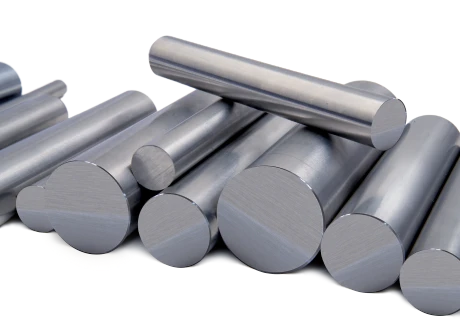
This article explains the practical differences between 410 and 420 stainless steel from the perspective of stainless steel long products - especially bars used for machining, shafts, mechanical components, precision parts, and engineered industrial applications.
What Is 410 Stainless Steel?
410 is a martensitic stainless steel containing chromium as the primary alloying element.
It is heat treatable and offers a useful combination of:
410 is commonly used in components such as:
It is often preferred where strength is required, but extremely high hardness is not the main objective.
What Is 420 Stainless Steel?
420 stainless steel is also martensitic, but it contains higher carbon than 410.
That higher carbon content allows 420 to achieve higher hardness after heat treatment.
This makes it suitable for applications where wear resistance and edge retention are more important.
420 is commonly used in:
420 is generally less forgiving than 410 in machining, heat treatment, and dimensional control.
410 vs 420 Stainless Steel: Core Difference
| Parameter | 410 Stainless Steel | 420 Stainless Steel |
|---|---|---|
| Stainless Family | Martensitic | Martensitic |
| Carbon Level | Lower | Higher |
| Hardness Potential | Moderate | Higher |
| Toughness | Generally better | Lower compared with 410 at higher hardness |
| Wear Resistance | DModerate | Better |
| Machinability | Easier | More demanding |
| Corrosion Resistance | Moderate | Moderate, condition-dependent |
| Heat Treatment Sensitivity | Important | More critical |
| Typical Selection Reason | Strength + toughness balance | Hardness + wear resistance |
The broad distinction is clear:
410 is often chosen for strength and toughness balance.
420 is chosen when higher hardness and wear resistance are required.
Heat Treatment Response: Where the Real Difference Begins
For martensitic stainless steels, heat treatment is not a secondary process.
It defines final performance.
Both 410 and 420 require proper hardening and tempering to achieve the desired mechanical properties. But 420 responds more strongly because of its higher carbon content.
Why Heat Treatment Discipline Matters
Poor heat treatment can create:
With 410, there is generally more processing flexibility.
With 420, the process window becomes tighter, especially where higher hardness is required.
In precision bars, shaft-quality applications, and components requiring grinding after heat treatment, dimensional stability becomes a serious concern.
Machining Behavior: 410 Is More Forgiving, 420 Demands More Control
Machining is one of the most practical areas where buyers and machine shops feel the difference.
Machining 410 Stainless Steel
410 is usually more manageable in machining compared with 420.
It can still work harden and produce heat, but with the right tool geometry, coolant strategy, and cutting parameters, it is relatively stable.
Machining 420 Stainless Steel
420 can be more demanding, particularly in hardened or higher-strength conditions.
The higher carbon content and hardness potential increase the importance of:
If 420 is poorly processed, machine shops may face:
In high-volume machining, these problems become expensive quickly.
Corrosion Resistance: Neither Grade Should Be Oversold
Both 410 and 420 offer moderate corrosion resistance, mainly due to chromium content.
But neither should be treated like 304L or 316L.
Their corrosion performance depends heavily on:
420, especially at higher hardness, may not be the best choice where corrosion exposure is aggressive unless the application has been carefully reviewed.
For wet, chloride-bearing, chemical, or marine environments, austenitic or duplex stainless steels may be more suitable depending on strength requirements.
This is where technical application review matters.
Application-Relevant Insights
Pump Shafts and Mechanical Shafts
410 is often suitable where moderate corrosion resistance, strength, and toughness are required.
420 may be considered when wear resistance or higher hardness is important, but machining and grinding discipline must be stronger.
For shaft applications, straightness, surface finish, hardness uniformity, and internal soundness are critical.
Valve and Pump Components
Both grades may be used in valve and pump parts depending on the service environment.
410 offers a practical balance.
420 may be preferred for parts exposed to wear, sliding contact, or sealing-related stresses.
Precision Machining
410 is generally more predictable in machining.
420 can be successfully machined, but it requires greater process control and may increase tooling cost.
Aerospace and Critical Engineering
In critical applications, the grade alone does not define suitability.
Heat treatment control, traceability, inspection discipline, and repeatable process capability matter heavily.
For aerospace-oriented expectations, documentation and process reliability become as important as chemistry compliance.
Industry Reality: Higher Hardness Is Not Always Better
One of the most common mistakes in material selection is assuming that higher hardness automatically means better performance.
It does not.
Higher hardness can improve wear resistance, but it may also reduce toughness, increase brittleness, complicate machining, and raise distortion risk during heat treatment.
Hidden Costs of Over-Specifying 420
| Decision or Issue | Possible Downstream Cost |
|---|---|
| Selecting 420 when 410 is adequate | Higher machining cost |
| Excessive hardness requirement | Tool wear and grinding difficulty |
| Poor heat treatment control | Distortion or cracking |
| Weak surface conditioning | Corrosion complaints |
| Inconsistent bar straightness | CNC instability |
| Inadequate inspection | Late-stage rejection |
A technically correct grade can still become a commercially poor decision if the application does not truly require its properties.
410 vs 420: Practical Selection Guide
| Application Requirement | Better Fit |
|---|---|
| Better toughness | 410 |
| Higher hardness | 420 |
| Easier machining | 410 |
| Better wear resistance | 420 |
| General shafts | 410 |
| Wear-prone components | 420 |
| Lower processing risk | 410 |
| Higher heat-treatment sensitivity accepted | 420 |
This is not a substitute for application engineering.
But it is a useful starting point.
The final decision should consider section size, hardness range, machining route, corrosion environment, inspection requirements, and expected service life.
Why Billet Quality and Bar Processing Matter
For martensitic stainless steel bars, upstream process control is critical.
The bar may pass chemistry requirements and still create problems later if the process route is weak.
Important factors include:
For 410 and 420, the interaction between heat treatment and dimensional stability is especially important.
A bar that moves excessively after machining or grinding creates cost far beyond the material price difference.
Inspection and NDT Considerations
In applications involving shafts, machined components, rotating parts, or critical mechanical service, inspection capability becomes important.
Depending on order requirements, buyers may evaluate:
Inspection does not replace process control. But it helps verify that the process has produced a reliable product. For critical applications, both are necessary.
Conclusion: The Right Grade Depends on the Real Engineering Requirement
410 and 420 stainless steels serve different purposes.
410 offers a practical balance of strength, toughness, machinability, and moderate corrosion resistance.
420 offers higher hardness and wear resistance, but demands tighter heat treatment discipline, more careful machining, and stronger control over dimensional stability.
The better choice is not the harder grade.
It is the grade that matches the real operating condition, manufacturing route, and failure risk.
For industrial buyers, the selection should move beyond basic grade comparison and focus on total performance - from billet to bar, from machining to assembly, and from inspection to service.
That is where process discipline becomes the real differentiator.
Surface Integrity in 420 Stainless Steel Flat Bars: EN 1.4021 - 1.4034 for Precision Medical Tools
ASTM A276 vs ASTM A479 vs ASME SA-479: Which Stainless Steel Bar Standard Should Buyers Specify?
304 vs 316 vs 316L Stainless Steel: Differences in Corrosion, Machining, Cost and Applications
Rolled Flat Bar or Slit Flat Bar? The Manufacturing Differences Buyers Should Understand

A-30, Site 4, UPSIDC Industrial Area, Sahibabad, Ghaziabad 201010, Uttar Pradesh, India
Plot #10, Site 2, Industrial Area, Loni Road Mohan Nagar, Ghaziabad 201007, Uttar Pradesh, India
Let’s Start Your Project