

Understanding the Process, Metallurgy, and Industrial Relevance of HRAP Stainless Flat Bars
Many stainless steel flat bars look acceptable at first glance.
Dimensions appear correct. Surface looks usable. Chemistry meets specification.
Yet problems often begin much later - during fabrication, machining, welding, polishing, bending, or service exposure.
In many cases, these problems are not caused by the stainless steel grade alone.
They originate from the manufacturing route behind the flat bar.
This is particularly true for Hot Rolled Annealed and Pickled (HRAP) stainless steel flat bars, where rolling discipline, heat treatment consistency, surface conditioning, and process control directly influence downstream performance.
Why HRAP Stainless Steel Flat Bars Matter in Industrial Manufacturing
Hot rolled annealed and pickled stainless steel flat bars occupy an important position between raw hot rolled material and precision cold-finished products.
They are widely used where:
Must coexist.
Unlike decorative stainless products, HRAP flat bars are typically selected for industrial function first.
Their real value lies in predictable manufacturing behavior and dependable performance across fabrication and engineering applications.
For OEMs, fabricators, machine shops, and engineering teams, understanding what truly defines a properly manufactured HRAP flat bar is important - because not all flat bars behave the same in downstream operations.
What Is a Hot Rolled Annealed and Pickled Stainless Steel Flat Bar?
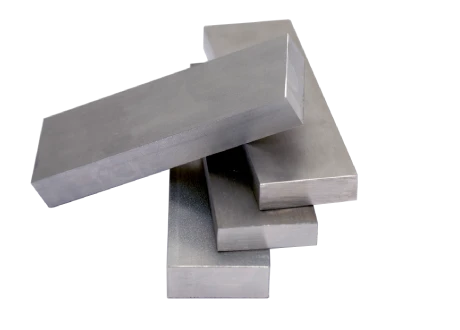
A Hot Rolled Annealed and Pickled (HRAP) stainless steel flat bar is a stainless long product manufactured through:
Each stage plays a distinct metallurgical and process role.
The objective is not simply producing a flat section.
The process is intended to create:
HRAP flat bars are commonly used in:
Understanding the HRAP Manufacturing Process
1. Hot Rolling
The process begins with hot rolling stainless steel billets into flat bar sections at elevated temperatures.
Hot rolling shapes the material efficiently while refining grain structure and producing the required dimensions.
However, hot rolling alone is not enough.
Without proper downstream processing, hot rolled stainless products can retain:
This is why annealing and pickling become critical.
2. Annealing: More Than Just Heat Treatment
Annealing is often misunderstood as a routine thermal step.
In reality, it is fundamental to restoring the metallurgical balance of stainless steel after hot working.
Proper annealing helps:
For austenitic grades like 304L and 316L, proper annealing becomes especially important for welding and corrosion performance.
Poor annealing discipline can create downstream issues such as:
In industrial stainless manufacturing, thermal discipline often separates reliable products from inconsistent ones.
3. Pickling: Why Surface Conditioning Matters
After annealing, stainless steel surfaces typically carry oxide scale and heat tint.
Pickling removes these surface oxides chemically.
This process is not merely cosmetic.
Proper pickling helps restore the chromium-rich passive surface layer responsible for corrosion resistance.
A poorly pickled surface may lead to:
In fabrication-heavy industries, surface condition directly influences downstream reliability.
Common Stainless Steel Grades Used in HRAP Flat Bars
Frequently Used Grades and Their Applications
| Grade | Typical Characteristics | Common Applications |
|---|---|---|
| 304L / 1.4307 | General corrosion resistance and weldability | Structural fabrication, food processing |
| 316L / 1.4404 | Improved chloride resistance | Marine, chemical, pumps |
| 316Ti / 1.4571 | Stabilized for elevated temperature service | Process and thermal systems |
| Duplex F51 | Higher strength and chloride resistance | Oil & gas, offshore, aggressive environments |
| 310S | High-temperature oxidation resistance | Furnace and thermal applications |
| 410 | Heat-treatable martensitic grade | Mechanical and wear applications |
Actual grade selection depends heavily on:
Why Flat Bar Process Consistency Matters More Than Many Buyers Realize
For many procurement teams, stainless flat bars are still viewed as relatively straightforward products.
But in real industrial environments, inconsistent flat bars can create substantial downstream cost.
Common Operational Problems Linked to Poor Process Control
Dimensional Inconsistency
Variation in thickness or flatness can affect:
Surface Defects
Surface imperfections may only become visible after:
Late-stage rejection is often expensive.
Residual Stress Problems
Improper thermal or rolling control can contribute to:
Weldability Issues
Poor surface condition or metallurgical inconsistency can affect:
Industry Reality: Chemistry Compliance Alone Does Not Guarantee Performance
One of the biggest misconceptions in stainless steel sourcing is assuming that compliance with chemical composition automatically ensures good industrial performance.
It does not.
Two flat bars with identical chemistry may behave very differently during fabrication or service.
Why?
Because performance is also influenced by:
In many industrial applications, process reliability matters just as much as nominal chemistry compliance.
HRAP Flat Bars vs Cold Finished Flat Bars
Understanding the Difference
| Parameter | HRAP Flat Bars | Cold Finished Flat Bars |
|---|---|---|
| Manufacturing Route | Hot rolled + annealed + pickled | Cold drawn or precision finished |
| Surface Finish | Industrial matte finish | Smoother and brighter |
| Dimensional Tolerance | Moderate | Tighter |
| Internal Stress | Lower after annealing | May vary depending on process |
| Structural Use | Common | Less common |
| Precision Machining | Limited depending on tolerance needs | More suitable |
| Fabrication Applications | Excellent | Good |
| Cost Position | Generally more economical | Higher processing cost |
The choice depends on application priorities.
HRAP flat bars are often preferred where fabrication, structural reliability, corrosion resistance, and industrial practicality matter more than precision cosmetic finish.
Where HRAP Flat Bars Are Commonly Used
Fabrication & Structural Engineering
Used in:
Flatness and weldability become important here.
Food & Dairy Equipment
Surface cleanliness and corrosion resistance are critical.
Improper pickling or contamination can become a hygiene risk.
Chemical & Process Industries
Applications may involve:
Material consistency becomes important for lifecycle reliability.
Oil & Gas Support Systems
Duplex and higher-alloy HRAP flat bars are often used where:
Must coexist.
Why Heat Treatment Discipline Matters in Stainless Flat Bars
Heat treatment consistency is often underestimated in stainless long products.
Yet poor thermal control can affect:
This becomes especially important in:
Industrial buyers increasingly evaluate not only the product - but the process stability behind the product.
Inspection and Quality Expectations
For serious industrial applications, inspection capability matters.
Depending on application requirements, HRAP flat bars may undergo:
Inspection should not be viewed only as final-stage acceptance.
The best manufacturing systems integrate quality throughout the process route itself.
Hidden Costs of Poor HRAP Flat Bar Quality| Upstream Issue | Potential Downstream Impact |
|---|---|
| Poor pickling | Surface contamination or corrosion risk |
| Inconsistent annealing | Hardness variation and fabrication instability |
| Surface defects | Rejection after laser cutting or polishing |
| Residual stress | Distortion during machining or welding |
| Flatness inconsistency | Assembly and fabrication issues |
| Weak process discipline | Batch-to-batch inconsistency |
These issues rarely appear in basic material comparisons.
But they frequently appear later as:
Conclusion
Hot Rolled Annealed and Pickled stainless steel flat bars are often perceived as relatively simple industrial products.
In reality, their downstream performance depends heavily on manufacturing discipline.
Hot rolling defines the shape.
Annealing restores metallurgical balance.
Pickling restores surface integrity and corrosion performance.
When these processes are executed consistently, HRAP flat bars become dependable materials for demanding fabrication and engineering environments.
When they are not, the hidden costs often appear later - during welding, machining, assembly, or field operation.
As industrial expectations continue to rise globally, buyers are increasingly evaluating more than just chemistry and price.
They are evaluating process reliability.
And in stainless steel long products, that distinction matters.
Learn More
At Aamor Inox, we work closely with OEMs, machine shops, distributors, and engineering teams across global industries where consistency, precision, and process reliability matter.
From stainless steel bright bars and PSQ grades to precision-engineered specialty long products, our focus goes beyond simply supplying material - it is about delivering repeatable performance across demanding manufacturing environments.
To discuss your application requirements or sourcing challenges, connect with our team.
Explore more insights on stainless steel manufacturing, machining performance, quality systems, and process reliability at Aamor Inox.
Surface Integrity in 420 Stainless Steel Flat Bars: EN 1.4021 - 1.4034 for Precision Medical Tools
ASTM A276 vs ASTM A479 vs ASME SA-479: Which Stainless Steel Bar Standard Should Buyers Specify?
304 vs 316 vs 316L Stainless Steel: Differences in Corrosion, Machining, Cost and Applications
Rolled Flat Bar or Slit Flat Bar? The Manufacturing Differences Buyers Should Understand

A-30, Site 4, UPSIDC Industrial Area, Sahibabad, Ghaziabad 201010, Uttar Pradesh, India
Plot #10, Site 2, Industrial Area, Loni Road Mohan Nagar, Ghaziabad 201007, Uttar Pradesh, India
Let’s Start Your Project