
Understanding the Process Discipline Behind Precision Stainless Long Products
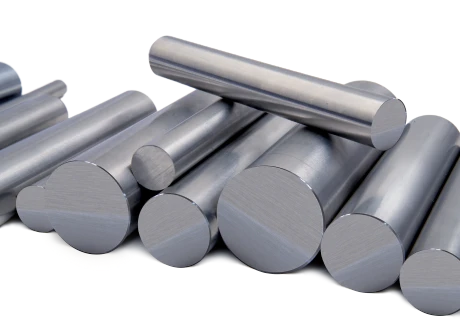
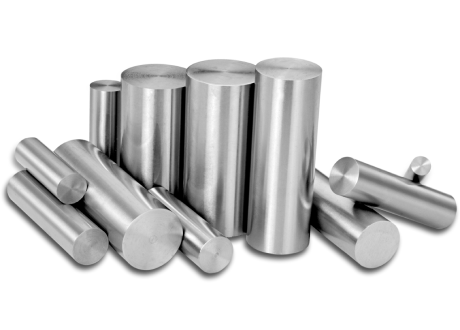
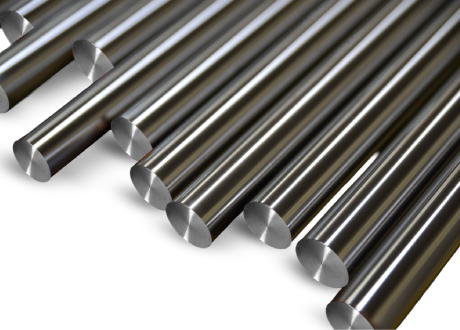
A stainless steel bright bar may look simple from the outside.
Straight. Smooth. Shiny. Dimensionally accurate.
But in real manufacturing environments, the difference between a reliable bright bar and a problematic one often reveals itself only after machining begins, during heat treatment, inside hydraulic systems, or after a component reaches final assembly.
That is where many hidden costs originate.
In many cases, the issue is not the stainless steel grade itself.
It is the manufacturing discipline behind the bar.
Why Stainless Steel Bright Bars Matter More Than They Appear
Bright bars are not merely “finished bars.”
They are precision-engineered stainless steel long products manufactured through tightly controlled cold finishing and finishing-process routes to achieve specific dimensional, surface, metallurgical, and machining characteristics.
Unlike general-purpose hot rolled products, bright bars are expected to perform consistently in downstream precision manufacturing environments.
That expectation changes everything.
For many OEMs and machine shops, bright bars directly influence:
In critical applications, the bar is not simply raw material.
It becomes part of the process capability of the customer itself.
What Exactly Is a Stainless Steel Bright Bar?
A stainless steel bright bar is a cold-finished stainless steel long product manufactured through processes such as:
The objective is not aesthetics alone.
The “bright” finish is often a byproduct of achieving:
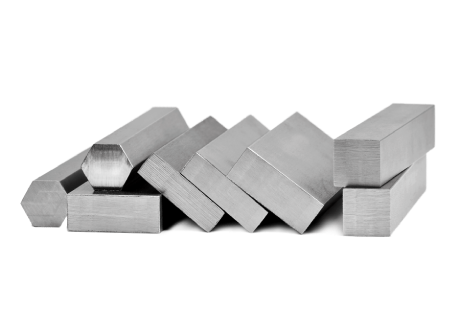
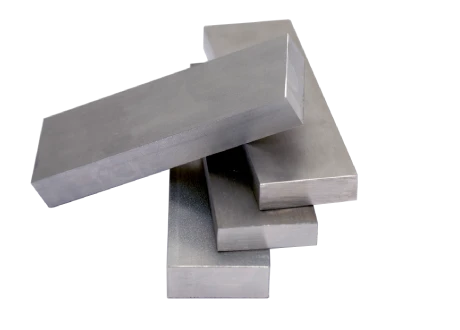
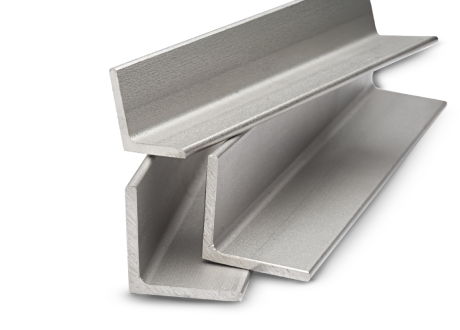
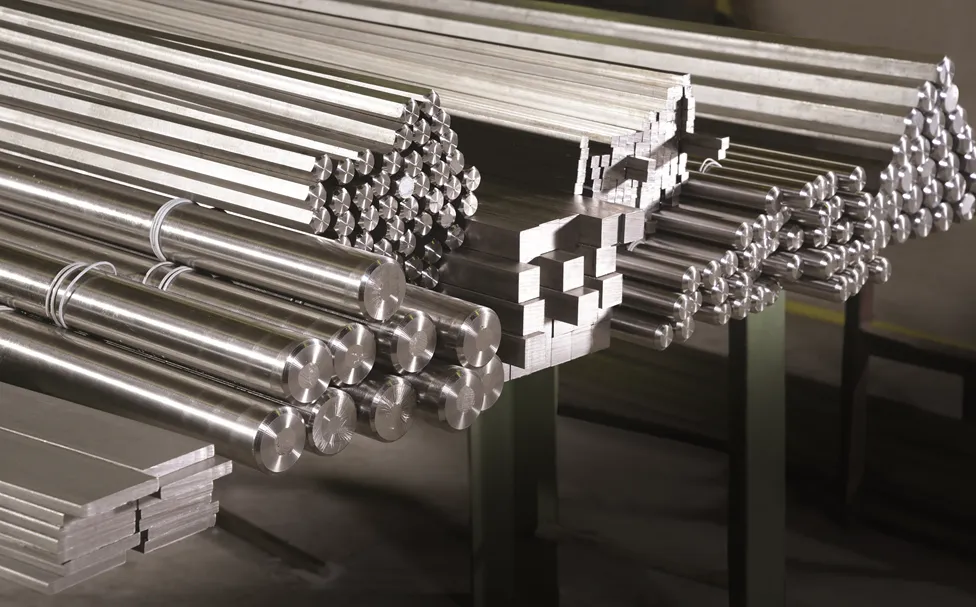
Bright bars are commonly supplied in:
Depending on the application, they may be supplied as:
How Stainless Steel Bright Bars Are Manufactured
The performance of a bright bar is heavily influenced by the sequence and discipline of the manufacturing process itself.
Typical Bright Bar Manufacturing Route
| Process Stage | Purpose |
|---|---|
| Billet Selection | Controls chemistry consistency, inclusion profile, and internal soundness |
| Hot Rolling | Produces primary bar dimensions |
| Heat Treatment | Develops required mechanical and metallurgical properties |
| Surface Conditioning | Removes scale and surface imperfections |
| Cold Finishing | Improves dimensional accuracy and surface finish |
| Straightening | Controls runout and bar straightness |
| UT / NDT Inspection | Detects internal or surface discontinuities |
| Final Inspection | Confirms dimensional, visual, and quality compliance |
The important point is this:
Bright bar consistency is cumulative.
Small process inconsistencies at early stages often become expensive downstream problems later.
The Hidden Difference Between Commodity Bars and Process-Controlled Bright Bars
Two bars may carry the same grade designation - for example 316L or 420 - yet behave completely differently during machining or final application.
Why?
Because the downstream performance of stainless steel bars depends heavily on factors that are rarely visible on a material test certificate alone.
Some Often-Overlooked Variables Include:
This is one of the biggest misconceptions in stainless steel sourcing.
Many procurement decisions are still made primarily on chemistry and price comparison.
But in real manufacturing environments, process reliability often matters far more than nominal chemistry compliance alone.
Why Machining Performance Depends on More Than Grade Selection
Machine shops frequently focus on selecting the correct stainless grade.
That is important.
But machining stability is often determined by manufacturing consistency rather than chemistry alone.
Common Machining Problems Linked to Poor Bar Quality
Inconsistent Tool Life
Variation in hardness, inclusion distribution, or residual stresses can create unpredictable machining behavior across batches.
Vibration and Chatter
Poor straightness or inconsistent dimensional stability can affect turning accuracy, especially in long components and Swiss machining.
Surface Tearing
Improper heat treatment or surface conditioning may lead to tearing during aggressive machining or polishing operations.
Dimensional Drift
Residual stress imbalance can cause movement after machining, particularly in precision shafts and tight-tolerance components.
Where Bright Bars Matter Most
Pump Shaft Quality (PSQ) Applications
In pump shafts, straightness, concentricity, and surface integrity become critical.
Even small inconsistencies can create:
This is why PSQ bars typically require tighter control over:
Swiss Machining Applications
Swiss machining environments are highly sensitive to material consistency.
Bar instability can affect:
Swiss machine quality bars therefore often demand:
Aerospace & Precision Engineering
In aerospace-oriented manufacturing, bright bars are often expected to meet much tighter process expectations.
The focus extends beyond dimensional tolerance.
There is increasing emphasis on:
This is where manufacturing systems become as important as the material itself.
Bright Bar Manufacturing Processes Compared
Common Stainless Steel Bright Bar Finishing Routes
| Process | Primary Objective | Typical Applications |
|---|---|---|
| Cold Drawn | Dimensional accuracy | General engineering |
| Smooth Turned | Improved surface integrity | Shafts and rotating components |
| Centerless Ground | Tight tolerance and surface finish | Precision engineering |
| Polished | Surface aesthetics and cleanliness | Food, pharma, decorative |
| PSQ Finished | Straightness and reliability | Pumps and hydraulic systems |
| Swiss Quality | Dimensional stability | CNC and Swiss machining |
Each route involves different trade-offs between:
The Industry Reality: Many Failures Start Before Machining Begins
One of the costliest assumptions in manufacturing is believing that all bright bars of the same grade perform similarly.
In reality, many downstream problems originate much earlier.
Hidden Costs of Poor Process Control
| Upstream Issue | Downstream Impact |
|---|---|
| Inclusion inconsistency | Tool breakage and poor surface finish |
| Improper heat treatment | Hardness variation and machining instability |
| Surface defects | Rejection after chrome plating or polishing |
| Poor straightness | CNC vibration and dimensional deviation |
| Weak UT sensitivity | Late-stage rejection risk |
| Residual stress imbalance | Distortion after machining |
These costs rarely appear in the initial purchase price comparison.
But they often emerge later through:
Why NDT and Inspection Capability Matter
For many precision and critical applications, inspection capability becomes a major differentiator.
Not merely because testing is performed - but because of how consistently and sensitively it is executed.
Depending on the application, stainless steel bright bars may undergo:
In precision manufacturing environments, inspection systems are increasingly expected to support process reliability rather than simple final acceptance.
That distinction is becoming more important globally.
Stainless Steel Grades Commonly Used in Bright Bars
Common Grades and Their Typical Applications
| Grade | Key Characteristics | Common Applications |
|---|---|---|
| 304 / 304L | General corrosion resistance | Engineering and fabrication |
| 316 / 316L | Improved chloride resistance | Marine, pumps, chemical systems |
| 410 | Heat treatable martensitic grade | Shafts and mechanical components |
| 416 | Free-machining stainless | CNC machining applications |
| 420 | Higher hardness capability | Precision mechanical parts |
| 431 | High strength with corrosion resistance | Aerospace and shafts |
| Duplex Grades | Higher strength and corrosion resistance | Oil & gas and process industries |
Actual grade suitability depends heavily on the manufacturing route, heat treatment condition, machining expectations, and final application environment.
What Buyers Should Evaluate Beyond Chemistry
For OEMs, distributors, and procurement teams, evaluating bright bars purely on price or chemistry compliance can become risky in precision applications.
A more meaningful evaluation often includes:
Questions Worth Asking
These factors usually influence lifecycle performance far more than surface appearance alone.
Conclusion
Stainless steel bright bars are often evaluated as commodity inputs.
But in precision manufacturing environments, they behave more like process-critical engineered products.
Their real value is not defined by surface brightness alone.
It is determined by:
As global manufacturing expectations continue to rise - especially across aerospace, precision machining, pumps, hydraulic systems, and engineered industrial applications - the conversation around bright bars is gradually shifting from simple supply toward process reliability.
And increasingly, that distinction matters.
Learn More
At Aamor Inox, we work closely with OEMs, machine shops, distributors, and engineering teams across global industries where consistency, precision, and process reliability matter.
From stainless steel bright bars and PSQ grades to precision-engineered specialty long products, our focus goes beyond simply supplying material - it is about delivering repeatable performance across demanding manufacturing environments.
To discuss your application requirements or sourcing challenges, connect with our team.
Explore more insights on stainless steel manufacturing, machining performance, quality systems, and process reliability at Aamor Inox.
Surface Integrity in 420 Stainless Steel Flat Bars: EN 1.4021 - 1.4034 for Precision Medical Tools
ASTM A276 vs ASTM A479 vs ASME SA-479: Which Stainless Steel Bar Standard Should Buyers Specify?
304 vs 316 vs 316L Stainless Steel: Differences in Corrosion, Machining, Cost and Applications
Rolled Flat Bar or Slit Flat Bar? The Manufacturing Differences Buyers Should Understand

A-30, Site 4, UPSIDC Industrial Area, Sahibabad, Ghaziabad 201010, Uttar Pradesh, India
Plot #10, Site 2, Industrial Area, Loni Road Mohan Nagar, Ghaziabad 201007, Uttar Pradesh, India
Let’s Start Your Project