
In precision manufacturing, the selection of material mainly affects component lifespan, fabrication efficiency, machinability, and overall production costs. This is true while comparing stainless steel 303 vs 304 – the austenitic stainless steel series. Selecting the right material for right application can eliminate waste, enhance manufacturing efficiency, and assist to avoid any costly mistakes later in the production process.
The Costliest Mistake Is Often Choosing the Right Stainless Steel for the Wrong Reason
Few stainless steel grade comparisons create more confusion in manufacturing than 303 versus 304L.
On paper, they appear closely related.
Both belong to the 300-series austenitic stainless steel family. Both offer good corrosion resistance. Both are widely available globally. Both are frequently specified across industrial applications.
Yet in machine shops, production facilities, and engineering departments, these two grades behave very differently.
A purchasing team may see similar chemistry families and assume interchangeability. A machine shop may prefer one grade because it cuts faster. A design engineer may prioritize corrosion performance. A quality team may focus on weldability.
The challenge is that each perspective is correct—but only partially.
The real difference between 303 and 304L is not simply chemistry. It is how each grade impacts machining productivity, manufacturing costs, corrosion performance, fabrication flexibility, and long-term application reliability.
Understanding these trade-offs can prevent costly mistakes that often remain hidden until production begins.
Why This Comparison Matters
For many industrial components, material cost represents only a fraction of total manufacturing cost.
Machining, tooling, inspection, welding, rework, scrap, and production downtime often contribute far more to the final component cost than the raw material itself.
This is precisely where the distinction between 303 and 304L becomes important.
One grade was engineered primarily to improve machinability.
The other was developed to maximize corrosion resistance and fabrication performance.
Selecting the wrong grade can create unnecessary manufacturing challenges—or unnecessary costs
What Is 303 Stainless Steel?
303 is a free-machining austenitic stainless steel.
It is essentially a modified version of 304 with sulfur intentionally added to improve machining behavior.
The sulfur creates manganese sulfide inclusions that act as chip breakers during machining operations.
This results in:
-Improved chip control
-Reduced cutting forces
-Better tool life
-Higher machining productivity
-More stable CNC operations
For manufacturers producing large volumes of machined components, these advantages can be significant.
However, every metallurgical improvement comes with a trade-off.
The sulfur additions that improve machinability can also reduce corrosion resistance and weldability compared with 304L.
What Is 304L Stainless Steel?
304L is the low-carbon version of standard stainless steel 304.
The “L” designation refers to reduced carbon content, which minimizes carbide precipitation during welding and improves resistance to intergranular corrosion.
304L is often selected when applications require:
• Corrosion resistance
• Weldability
• Fabrication flexibility
• Hygienic performance
• Long-term durability
Unlike 303, 304L is not optimized for machining. Its toughness and ductility, while beneficial in many applications, often make machining more challenging.
303 vs 304L: Key Property Comparison
| Property | 303 Stainless Steel | 304L Stainless Steel |
|---|---|---|
| Stainless Family | Austenitic | Austenitic |
| Machinability | Excellent | Moderate |
| Corrosion Resistance | Good | Better |
| Weldability | Limited | Excellent |
| Formability | Moderate | Excellent |
| Chip Control | Excellent | Challenging |
| Tool Life | Longer | Lower |
| Surface Finish During Machining | Easier to Achieve | More Difficult |
| Magnetic | Generally Non-Magnetic | Generally Non-Magnetic |
| Typical Use | Machined Components | Fabricated & Corrosion-Resistant Components |
The Biggest Difference: Machining Performance
Why Machine Shops Often Prefer 303
Anyone who has machined both grades understands the difference immediately.
303 was specifically designed to improve machining efficiency.
The sulfur additions promote controlled chip breakage, reducing many of the issues commonly encountered when machining austenitic stainless steels.
Benefits typically include:
• Higher cutting speeds
• Reduced built-up edge formation
• Better chip evacuation
• Longer tool life
• Improved process stability
• Lower tooling costs
For CNC turning, Swiss machining, threading, drilling, and complex precision machining, 303 often delivers substantial productivity advantages.
Why 304L Can Be More Difficult to Machine
304L retains the toughness and ductility characteristic of austenitic stainless steels.
While beneficial for fabrication and service performance, these properties can create machining challenges.
Common issues include:
• Long stringy chips
• Increased tool wear
• Built-up edge formation
• Greater heat generation
• More demanding chip management
Without proper tooling and process optimization, machining productivity can decline significantly.
This is one reason why machine shops frequently request 303 when corrosion requirements permit.
Industry Reality: Material Cost Is Rarely the Biggest Cost
Procurement teams often focus on raw material pricing.
Machine shops focus on total manufacturing cost.
The distinction matters.
A material that costs slightly more per kilogram but reduces cycle times, tooling consumption, and machine downtime may ultimately lower total production cost.
Conversely, selecting a highly machinable grade for an application requiring superior corrosion resistance can create far greater costs later through premature component failure.
The objective should not be selecting the cheapest material.
It should be selecting the material that creates the lowest total cost of ownership.
Corrosion Resistance: Where 304L Has a Clear Advantage
Why Sulfur Matters
The same sulfur additions that improve machinability in 303 can create localized areas that are more susceptible to corrosion.
As a result, 304L generally offers superior corrosion resistance.
This becomes increasingly important in environments involving:
• Moisture exposure
• Food processing
• Chemical handling
• Water systems
• Outdoor applications
• Hygienic environments
For applications where corrosion performance is critical, 304L is often the preferred choice.
Where the Difference Becomes Most Visible
In mild indoor environments, the performance gap may be relatively small.
However, in more aggressive conditions involving:
• Frequent cleaning cycles
• Humidity
• Condensation
• Chloride exposure
• Chemical exposure
304L typically demonstrates better long-term resistance.
This explains its widespread use across industries where cleanliness, durability, and corrosion performance are essential.
Weldability: One of the Most Overlooked Selection Criteria
Why 304L Is Preferred for Welding
The low-carbon chemistry of 304L was specifically developed to improve welding performance.
It reduces the risk of sensitization and intergranular corrosion in welded areas.
As a result, 304L is commonly used in:
• Tanks
• Process equipment
• Structural fabrications
• Food processing systems
• Pharmaceutical equipment
• Architectural applications
Why 303 Is Rarely the First Choice for Welded Structures
The sulfur additions that enhance machinability can negatively affect weld quality.
Potential concerns include:
• Increased cracking tendency
• Reduced weld integrity
• More difficult welding procedures
For heavily welded fabrications, engineers generally favor 304L.
Application-Based Selection Guide
Choose 303 When:
• Machining productivity is the primary objective
• Complex turned components are involved
• High-volume CNC production is required
• Swiss machining operations are used
• Extensive threading or drilling is necessary
• Corrosion exposure is moderate
Typical applications include:
• Precision fittings
• Valve components
• Instrument parts
• Fasteners
• CNC-machined connectors
• Pump and fluid system components
Choose 304L When:
• Corrosion resistance is critical
• Welding is required
• Fabrication flexibility matters
• Hygienic environments are involved
• Long-term durability is prioritized
Typical applications include:
• Food processing equipment
• Pharmaceutical systems
• Tanks and vessels
• Architectural components
• Process piping
• Structural fabrications
Hidden Manufacturing Costs Buyers Often Miss
When 304L Creates Unexpected Machining Costs
Many organizations specify 304L based solely on corrosion requirements.
However, if the application spends most of its life indoors and corrosion exposure is limited, the machining penalties of 304L may create unnecessary cost.
These costs can include:
• Increased tooling consumption
• Longer cycle times
• Additional machine downtime
• Reduced throughput
For large production runs, the impact can be substantial.
When 303 Creates Unexpected Service-Life Risks
The opposite mistake is equally common.
A buyer chooses 303 because it machines efficiently, only to discover later that the operating environment demands stronger corrosion resistance.
The resulting maintenance, replacement, or warranty costs can quickly exceed any machining savings.
This is why grade selection should always consider the complete lifecycle of the component.
Why Bar Manufacturing Consistency Matters More Than Many Buyers Realize
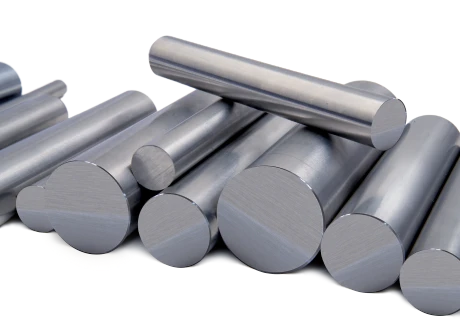
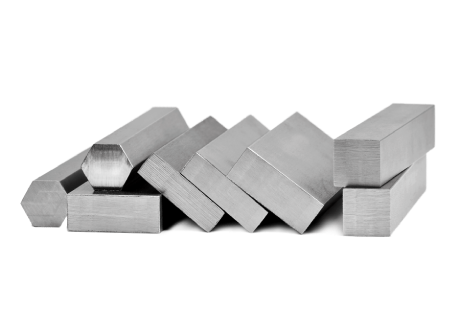
While 303 and 304L have different metallurgical characteristics, machining performance is also heavily influenced by how the bar itself is manufactured.
Factors such as:
• Billet quality
• Inclusion control
• Heat treatment consistency
• Straightness
• Surface integrity
• Residual stress control
• Dimensional accuracy
can significantly affect downstream performance.
Two bars of the same grade may produce very different machining results if process discipline differs.
This is particularly important in precision applications where repeatability is critical.
Comparison Summary
| Selection Priority | Recommended Grade |
|---|---|
| Maximum Machinability | 303 |
| Swiss Machining | 303 |
| CNC Productivity | 303 |
| Tool Life | 303 |
| Corrosion Resistance | 304L |
| Weldability | 304L |
| Fabrication | 304L |
| Hygienic Applications | 304L |
| Food Processing Equipment | 304L |
| Precision Machined Components | 303 |
Conclusion
The difference between 303 and 304L is not simply a matter of chemistry.
It is a question of manufacturing priorities.
303 was developed to improve machining productivity and remains one of the most efficient stainless steel grades for high-volume precision machining operations.
304L was developed to provide stronger corrosion resistance and superior weldability, making it a preferred choice for fabricated equipment and demanding service environments.
Neither grade is universally better.
The right choice depends on where value is created in the manufacturing process-and where risk exists in the application.
The most successful material selections are rarely based on a single property. They result from balancing machinability, corrosion performance, fabrication requirements, lifecycle expectations, and process consistency across the entire supply chain.
Learn More
At Aamor Inox, we work closely with OEMs, machine shops, distributors, and engineering teams across global industries where consistency, precision, and process reliability matter.
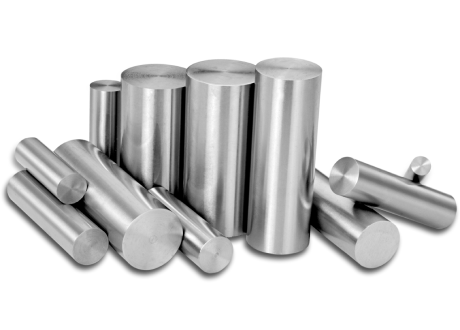
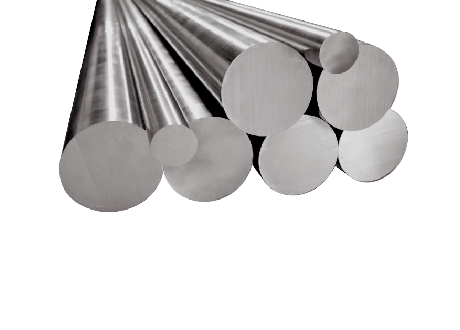
From stainless steel bright bars and PSQ grades to precision-engineered specialty long products, our focus goes beyond simply supplying material - it is about delivering repeatable performance across demanding manufacturing environments.
To discuss your application requirements or sourcing challenges, connect with our team. Explore more insights on stainless steel manufacturing, machining performance, quality systems, and process reliability at Aamor Inox.
Surface Integrity in 420 Stainless Steel Flat Bars: EN 1.4021 - 1.4034 for Precision Medical Tools
ASTM A276 vs ASTM A479 vs ASME SA-479: Which Stainless Steel Bar Standard Should Buyers Specify?
304 vs 316 vs 316L Stainless Steel: Differences in Corrosion, Machining, Cost and Applications
Rolled Flat Bar or Slit Flat Bar? The Manufacturing Differences Buyers Should Understand

A-30, Site 4, UPSIDC Industrial Area, Sahibabad, Ghaziabad 201010, Uttar Pradesh, India
Plot #10, Site 2, Industrial Area, Loni Road Mohan Nagar, Ghaziabad 201007, Uttar Pradesh, India
Let’s Start Your Project