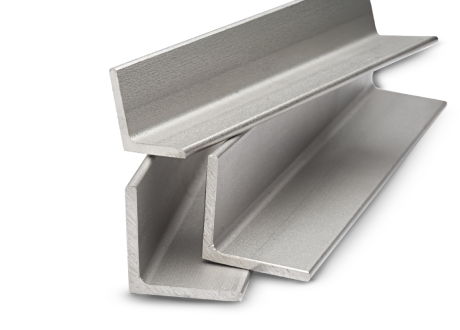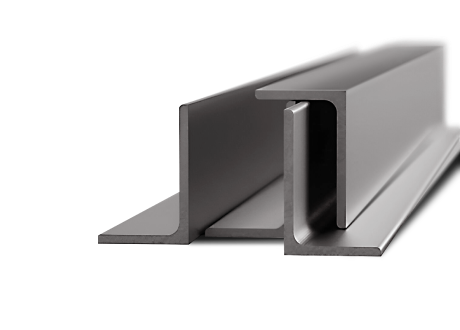

Understanding the Manufacturing Discipline Behind Industrial Stainless Steel Angles
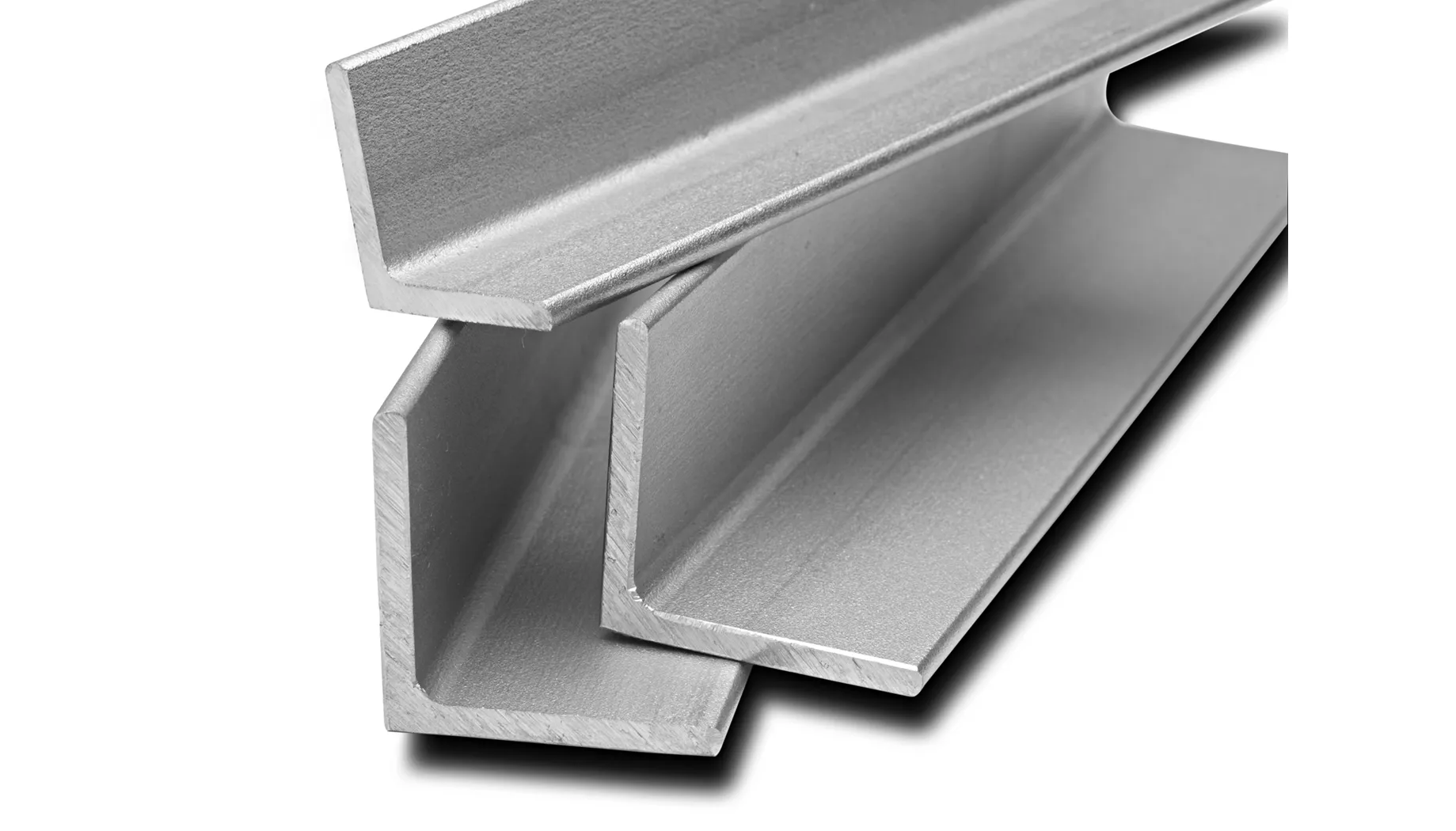
Stainless steel angles are often treated as simple structural products.
Until fabrication begins.
That is usually where the real difference between one stainless angle and another starts becoming visible.
In many industrial environments, these problems are not caused by the grade alone.
They originate from the manufacturing process behind the angle.
This is particularly relevant for Hot Rolled Annealed and Pickled (HRAP) stainless steel angles, where rolling quality, heat treatment discipline, surface conditioning, and dimensional consistency directly influence downstream fabrication reliability.
For OEMs, fabricators, distributors, and engineering teams, understanding what defines a properly manufactured HRAP stainless angle is more important than many realize.
Why HRAP Stainless Steel Angles Matter in Industrial Applications
Unlike decorative stainless products, HRAP stainless steel angles are primarily engineered for function.
They are widely used where:
Must coexist.
These products are commonly found in:
In such applications, the stainless angle becomes part of the overall process reliability of the system itself.
And that reliability depends heavily on how the product is manufactured.
What Are HRAP Stainless Steel Angles?
HRAP stands for:
Hot Rolled
Annealed
Pickled
An HRAP stainless steel angle is manufactured through a sequence of controlled industrial processes designed to achieve:
The process typically includes:
The final product is an industrial stainless steel angle suitable for demanding fabrication and engineering environments.
Understanding the HRAP Manufacturing Process
1. Hot Rolling: Forming the Structural Geometry
The process begins with hot rolling stainless steel billets into angle profiles at elevated temperatures.
Hot rolling allows the material to be shaped efficiently into equal or unequal angle sections while maintaining structural continuity.
This stage directly influences:
However, hot rolling alone leaves heavy oxide scale and thermal stress on the material surface.
That is why downstream processing becomes critical.
2. Annealing: Restoring Metallurgical Stability
After hot rolling, the stainless steel angle undergoes annealing.
This is not simply a thermal cycle for appearance improvement.
Annealing is essential for:
Without proper annealing discipline, downstream problems may emerge during:
For austenitic grades such as 304L and 316L, proper annealing also helps maintain corrosion performance after hot working.
For duplex grades, thermal control becomes even more sensitive due to microstructural balance requirements.
3. Pickling: Surface Integrity and Corrosion Performance
After annealing, the stainless steel surface typically carries oxide scale and heat tint.
Pickling chemically removes these oxides.
This step is often underestimated.
But for stainless steel products, surface condition directly affects corrosion performance.
Proper pickling helps restore the chromium-rich passive layer responsible for stainless steel corrosion resistance.
Poor pickling or incomplete descaling may contribute to:
In aggressive industrial environments, surface integrity is not cosmetic - it is functional.
Common Grades Used in HRAP Stainless Steel Angles
Frequently Used Grades and Typical Applications
| Grade | Key Characteristics | Typical Applications |
|---|---|---|
| 304L / 1.4307 | General corrosion resistance and weldability | Structural fabrication, food processing |
| 316L / 1.4404 | Improved chloride resistance | Marine and chemical environments |
| 316Ti / 1.4571 | Stabilized for elevated temperatures | Process systems and thermal applications |
| Duplex F51 | Higher strength and corrosion resistance | Offshore and oil & gas structures |
| 310S | Heat-resistant stainless steel | Furnace and thermal equipment |
| 410 | Heat-treatable martensitic stainless | Mechanical and wear-related systems |
Grade selection should always consider:
Why Manufacturing Consistency Matters in Stainless Steel Angles
For many buyers, stainless steel angles are treated as standard stock items.
But in real fabrication environments, inconsistencies become visible quickly.
Common Problems Caused by Poor Process Control
Dimensional Variation
Inconsistent leg dimensions or angle geometry can affect:
Distortion During Fabrication
Residual stress imbalance may lead to:
Surface Defects
Surface imperfections may become visible only after:
Late-stage rejection is usually expensive.
Weldability Concerns
Poor surface condition or inconsistent thermal processing may affect:
Industry Reality: Stainless Angles Are Often Evaluated Too Simplistically
One of the biggest misconceptions in stainless steel procurement is assuming that structural products are relatively uncomplicated.
In reality, stainless steel angles used in fabrication-heavy industries require significant process consistency.
Two products with identical chemistry may behave very differently in service.
Why?
Because performance depends not only on composition, but also on:
This becomes especially important in industries where fabrication precision and long-term corrosion performance matter.
HRAP Stainless Angles vs Carbon Steel Angles
Why Stainless Angles Are Chosen in Critical Environments
| Parameter | HRAP Stainless Steel Angles | Carbon Steel Angles |
|---|---|---|
| Corrosion Resistance | Excellent depending on grade | Requires coating or painting |
| Fabrication Performance | Strong weldability in many grades | Good |
| Maintenance Requirements | Lower in corrosive environments | Higher |
| Lifecycle Durability | Strong in aggressive applications | Limited in corrosive exposure |
| Surface Stability | Resistant to rusting | Vulnerable to oxidation |
| Initial Cost | Higher | Lower |
| Long-Term Operating Cost | Often lower in corrosive systems | Can increase due to maintenance |
In many industrial environments, lifecycle reliability becomes more important than initial material cost alone.
Where HRAP Stainless Steel Angles Are Commonly Used
Structural Fabrication
Used in:
Dimensional consistency and weldability are critical here.
Food & Dairy Systems
Cleanability and corrosion resistance matter significantly.
Improper surface condition can create hygiene risks.
Marine & Coastal Applications
Grades such as 316L and Duplex F51 are commonly selected where chloride exposure is significant.
Surface integrity and corrosion resistance become essential.
Oil & Gas Infrastructure
Strength, corrosion resistance, and fabrication consistency all matter simultaneously.
Chemical Processing Facilities
Chemical exposure, thermal cycling, and aggressive operating environments place higher demands on:
Why Heat Treatment Discipline Matters More Than Many Buyers Expect
In stainless steel long products, heat treatment is not merely a process stage.
It directly affects:
Poor annealing control may lead to:
Inconsistent hardness
Thermal distortion
Fabrication cracking
Or reduced corrosion resistance.
For duplex grades, improper thermal exposure may also disturb the ferrite-austenite balance critical for performance.
This is why serious industrial buyers increasingly evaluate manufacturing systems - not just material specifications.
Inspection and Quality Expectations
Depending on the application, HRAP stainless steel angles may undergo:
For critical applications, inspection capability becomes part of overall process reliability.
Especially in sectors such as:
Hidden Costs of Poor HRAP Stainless Angle Quality
| Upstream Issue | Potential Downstream Impact |
|---|---|
| Inconsistent rolling | Fabrication alignment problems |
| Poor annealing | Distortion or weldability inconsistency |
| Weak pickling process | Surface contamination or corrosion risk |
| Surface defects | Rework or late-stage rejection |
| Dimensional instability | Assembly and structural fitment issues |
| Inadequate process control | Batch inconsistency and unpredictable performance |
These costs rarely appear during initial sourcing discussions.
But they frequently emerge later through:
Conclusion
Hot Rolled Annealed and Pickled stainless steel angles are often viewed as basic structural products.
In practice, their long-term performance depends heavily on manufacturing discipline.
Hot rolling defines geometry and structural form. Annealing restores metallurgical balance and fabrication reliability. Pickling restores surface integrity and corrosion performance.
When these processes are controlled consistently, HRAP stainless steel angles become dependable materials for demanding industrial environments.
When they are not, the hidden costs usually appear later - during fabrication, welding, installation, or field operation.
As industrial expectations continue to evolve globally, the conversation is shifting beyond simple chemistry compliance and price comparison.
Increasingly, buyers are evaluating process reliability.
And in stainless steel long products, that distinction matters.
Surface Integrity in 420 Stainless Steel Flat Bars: EN 1.4021 - 1.4034 for Precision Medical Tools
ASTM A276 vs ASTM A479 vs ASME SA-479: Which Stainless Steel Bar Standard Should Buyers Specify?
304 vs 316 vs 316L Stainless Steel: Differences in Corrosion, Machining, Cost and Applications
Rolled Flat Bar or Slit Flat Bar? The Manufacturing Differences Buyers Should Understand

A-30, Site 4, UPSIDC Industrial Area, Sahibabad, Ghaziabad 201010, Uttar Pradesh, India
Plot #10, Site 2, Industrial Area, Loni Road Mohan Nagar, Ghaziabad 201007, Uttar Pradesh, India
Let’s Start Your Project